
The Logic of Drape
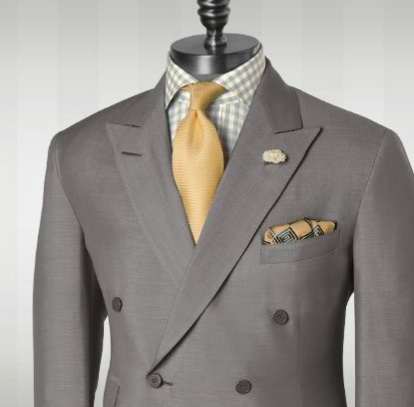
There are reasons for almost everything in dress. A reason why ties are tied as they are, a reason why shoes are constructed the way they are, and a reason why suits are cut particular ways. The drape cut is an astonishingly logical style, and it’s worth taking a closer look at just why it’s so amazing.
Mark Rykken was in Chicago this week doing a trunk show for his new Paul Stuart Custom offerings (which you should familiarize yourself with if you haven’t already), and we had some great tailoring conversations during an afternoon on Oak Street. Mark’s model is a modified, modern drape cut, inspired by the Anderson & Sheppard look but with his own perspective injected into the mix.
Listening to Mark explain why he’s infatuated with the drape cut is somewhere between hearing Byron recite his poems and Einstein explain relativity. As much science as art, and full of passion.

It’s of course difficult to explain in words and still images, but the basic principle is this: men want to look strong and athletic. Broad shoulders, strong chest, and slim waist are the trifecta of tailoring achievements. What the drape cut does is achieve all three by carefully re-outlining the body in as gentle and natural a way as possible.
It all begins with the shoulder. While a stiff military shoulder can ride close to the body, you need a little more outward volume with a drape cut suit. Otherwise you end up making the shoulder and chest look blobby. No good. From the slightly wider shoulder you hang the chest cloth – this is the cloth commonly referred to in it’s folded state as the “drape” of the suit. Already the line from the shoulder to the chest is moving towards the waist. Subtly curved lapels continue this line from the chest down to the coat-waist, making even the most rotund of us look slimmer.
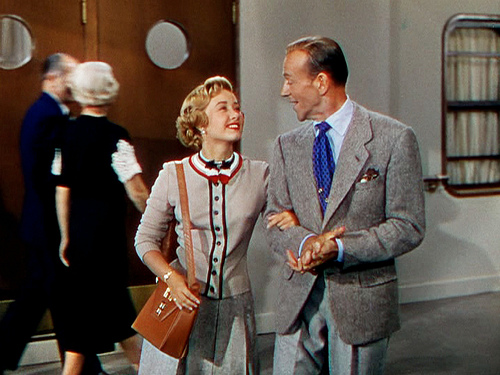
I had heard most of this before, but Rykken didn’t stop with the coat. What was new to me was his explanation of the fuller trouser associated with firms like Anderson & Sheppard. The idea is that the lines of the coat should be continued all the way from shoulder to floor. How your trouser fits in the thigh should be similar in silhouette to the bottom of your jacket – that way there is not horizontal break around your middle. Just brilliant.
It’s guys like Mark that hold the secrets to making any guy look his best, and it’s always a treat when I get opportunities to learn about the craft, history, and theory of dressing from Mark and those like him. Cheers gentlemen.


6 Comments
Jay Deputy
March 30, 2012These comments are “right on” with respect to a suit. It is simply much more than a jacket and a pair of trousers matching in fabric only. Thank you for sharing this bit of wisdom for men’s tailored garments.
Tom Hudson
March 30, 2012Is this an old article? I didn’t know that Mark Rykken had left Alan Flusser? I know Mark was instrumental in opening the Chicago PS but I thought that store was long closed?
Stephen
March 30, 2012Nope, not old at all. Mark is now with Paul Stuart again and has been for a while. The Hancock store is in fact closed, though there are still two PS locations in Chicago – Oak and LaSalle.
Toff
March 30, 2012Rykken has been at PS for almost two years. It took almost almost a year to officially launch it (Fall ’11). They were selling it basically via word of mouth for the first year. Rykken made sure he got the best person to do handmade buttonholes and that all the proper trimmings were imported from Savile Row.
AFJ
April 2, 2012Nice to have found your blog.
Stephen
April 2, 2012Thanks so much, glad you’re enjoying it.